
The UCSF Department of Psychiatry and Behavioral Sciences will host the 2026 Robert S. Wallerstein Lecture in Psychoanalysis and Psychotherapy on Wednesday, April 1, 2026, marking the 20th anniversary of one of the nation's foremost events centered on promoting psychoanalytic knowledge and clinical expertise that impact psychiatry, psychotherapy, and psychoanalysis in the 21st century.
This year's lectureship honoree, psychologist and noted health policy expert Kimberlyn Leary, PhD, MPA, will deliver the keynote lecture, "Clinical Listening as Civic Practice." The talk will give audience members the opportunity to learn more about the concept of listening as a civic commons, differences between analytic approaches to groups and organizational dynamics and the application of listening skills to civic participation, and the potential and limitations of bringing analytic listening to public discourse.
Immediately following her lecture presentation, Leary will join UCSF's Joseph A. Zamaria, PsyD, ABPP, for further discussion and analysis. There will also be a question and answer session for audience participants.
A dedicated clinician, researcher, and advisor on the public health impacts of mental health

Kimberlyn Leary, PhD, MPA
Leary is the Emma Bloomberg Lecturer in Public Policy and Management at the Harvard Kennedy School and has served as the Executive Vice President at the Urban Institute and is a Senior Advisor at New America. She was a consulting advisor to the Gates Foundation and previously served as an advisor to the National Math and Science Initiative. She is also faculty affiliate at the Program on Negotiation at Harvard Law School, as well as at the Center for Public Leadership the Women and Public Policy Program and the Ash Center for Democratic Governance and Innovation at Harvard Kennedy School. She also holds academic appointments as an associate professor at Harvard Medical School/McLean Hospital and the Harvard T.H. Chan School of Public Health.
For four years, she directed the Enabling Change program for the Doctor of Public Health program at the Harvard T.H. Chan School of Public Health. Leary also served as executive director of policy outreach for the Center of Excellence in Women’s Mental Health at McLean Hospital. Before that, she was chief psychologist at the Cambridge Health Alliance for nearly 12 years.
Leary served as an advisor to the White House during the Obama and Biden administrations. As a Robert Wood Johnson health policy fellow, she helped launch the Advancing Equity initiative for the Obama White House Council on Women and Girls. She was also an advisor to the health division at White House Office of Management and Budget and senior policy advisor to the Office of National Drug Control Policy. Leary also served as a senior advisor to the Biden White House Domestic Policy Council.
She writes, consults, and teaches on adaptive leadership, leading teams, cross-boundary collaboration, negotiation, and conflict transformation. Leary holds an MPA from the Harvard Kennedy School and a PhD in clinical psychology from the University of Michigan, and completed advanced training as a clinical psychoanalyst at the Michigan Psychoanalytic Association.
Leary is also a member of the Board of Trustees at the Emma Willard School and the Oprah Winfrey Leadership Academy for Girls. She currently serves as a Governor of the Folger Shakespeare Library and a Community Advisory Board Member at TD Bank.
Annual lecture series honors psychoanalytic pioneer
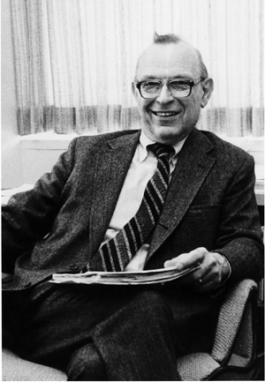
Robert S. Wallerstein, MD
Each year, the UCSF Department of Psychiatry and Behavioral Sciences invites a distinguished scholar to speak on campus as part of its special lecture series is held in honor of the late Robert S. Wallerstein, MD (1921–2014). First held in 2006, the annual series focuses on showcasing psychoanalytic knowledge and clinical expertise that influence psychiatry, psychotherapy, and psychoanalysis. Past speakers have included featured noted clinicians and researchers such as Otto Kernberg, MD; Beatrice Beebe, PhD; Mark Solms, PhD; and Bessel A. van der Kolk, MD.
Wallerstein was a distinguished psychiatrist, psychotherapy researcher, and psychoanalytic leader who left a legacy of a widened scope of theory and technique in the psychological sectors of psychiatry. He was an administrator who advocated for cooperation between psychiatrists, psychologists, and social workers in achieving academic excellence and sought to develop a new profession, the Doctor of Mental Health. Wallerstein also developed a departmental structure that worked across professional lines, leading to new ideas on research centers, educational plans, and high quality service delivery.
He trained at the Menninger Foundation in Topeka, Kansas, rising to become the foundation’s director of research and conducting a pioneering study called the Psychotherapy Research Project. He moved to the Bay Area in 1966 as the chief of psychiatry at Mount Zion Hospital, then joined the faculty of the UCSF Department of Psychiatry as a professor. Wallerstein served as department chair and director of the Langley Porter Psychiatric Institute from 1975–1985, as well as a training and supervising analyst at the San Francisco Psychoanalytic Institute, and president of both the American and International Psychoanalytic Associations.
In addition, he was a prodigious and influential author who penned 20 books and more than 400 scholarly articles. His books included Psychotherapy and Psychoanalysis: Theory, Practice, Research (1975), Becoming a Psychoanalyst (1981), Forty-Two Lives in Treatment (1986), The Talking Cures: The Psychoanalyses and the Psychotherapies (1995), Lay Analysis: Life Inside the Controversy (1998), Psychoanalysis: Clinical and Theoretical (1999), and Psychoanalysis: Education, Research, Science, and Profession (2003). In recognition of his outstanding contributions to the field of psychoanalysis, he received the prestigious Sigourney Award in 1991.
Free tickets now available
The Wallerstein Lecture is free and open to the public, but is geared towards a professional audience. It will be held from 1:00–4:00 p.m. at the UCSF Nancy Friend Pritzker Psychiatry Building (675 18th Street) in San Francisco and will also be streamed live online via Zoom. Registration is required.
For further information, visit psychiatry.ucsf.edu/wallerstein or email [email protected].
About UCSF Psychiatry and Behavioral Sciences
The UCSF Department of Psychiatry and Behavioral Sciences and the Langley Porter Psychiatric Institute are among the nation's foremost resources in the fields of child, adolescent, adult, and geriatric mental health. Together they constitute one of the largest departments in the UCSF School of Medicine and the UCSF Weill Institute for Neurosciences, with a focus on providing unparalleled patient care, conducting impactful research, training the next generation of behavioral health leaders, and advancing diversity, health equity, and community across the field.
UCSF Psychiatry and Behavioral Sciences conducts its clinical, educational, and research efforts at a variety of locations in Northern California, including the UCSF Nancy Friend Pritzker Psychiatry Building; UCSF Langley Porter Psychiatric Hospital; UCSF Health medical centers and community hospitals across San Francisco; UCSF Benioff Children’s Hospitals in San Francisco and Oakland; Zuckerberg San Francisco General Hospital and Trauma Center; the San Francisco VA Health Care System; UCSF Fresno; and numerous community-based sites around the San Francisco Bay Area.
About the UCSF Weill Institute for Neurosciences
The UCSF Weill Institute for Neurosciences, established by the extraordinary generosity of Joan and Sanford I. "Sandy" Weill, brings together world-class researchers with top-ranked physicians to solve some of the most complex challenges in the human brain.
The UCSF Weill Institute leverages UCSF’s unrivaled bench-to-bedside excellence in the neurosciences. It unites three UCSF departments—Psychiatry and Behavioral Sciences, Neurology, and Neurological Surgery—that are highly esteemed for both patient care and research, as well as the Neuroscience Graduate Program, a cross-disciplinary alliance of nearly 100 UCSF faculty members from 15 basic-science departments, as well as the UCSF Institute for Neurodegenerative Diseases, a multidisciplinary research center focused on finding effective treatments for Alzheimer’s disease, frontotemporal dementia, Parkinson’s disease, and other neurodegenerative disorders.
About UCSF
The University of California, San Francisco (UCSF) is exclusively focused on the health sciences and is dedicated to promoting health worldwide through advanced biomedical research, graduate-level education in the life sciences and health professions, and excellence in patient care. UCSF Health, which serves as UCSF’s primary academic medical center, includes top-ranked specialty hospitals and other clinical programs, and has affiliations throughout the Bay Area.


